
Kimchi Recipe | When Sanchogaru Marries Gochugaru

Updated: Aug 12
Curious about Madam Kimchi's kimchi recipe? Here, we will talk about Sichuan pepper powder, which helps harmonize diverse ingredients in kimchi paste.
Kimchi Conflicts, Ep 1-1: Have you ever seen someone add Sichuan pepper to Kimchi?
We publish articles about the ingredients and techniques behind Madam Kimchi, as well as the ideas and histories that have inspired our kimchi-making methodology. Many of these ingredients and practices are not always considered "standard" because of their regional specificity or because they are rooted in family histories shaped by migration and cultural exchange. This series is called Kimchi Conflicts.
A Pinch of Witch Powder
I suddenly remembered something my aunt once told me when I visited my family in Korea this spring. When her mother-in-law made kimchi, she added sanchogaru (산초가루). At first, my aunt was simply surprised. Or perhaps shocked.
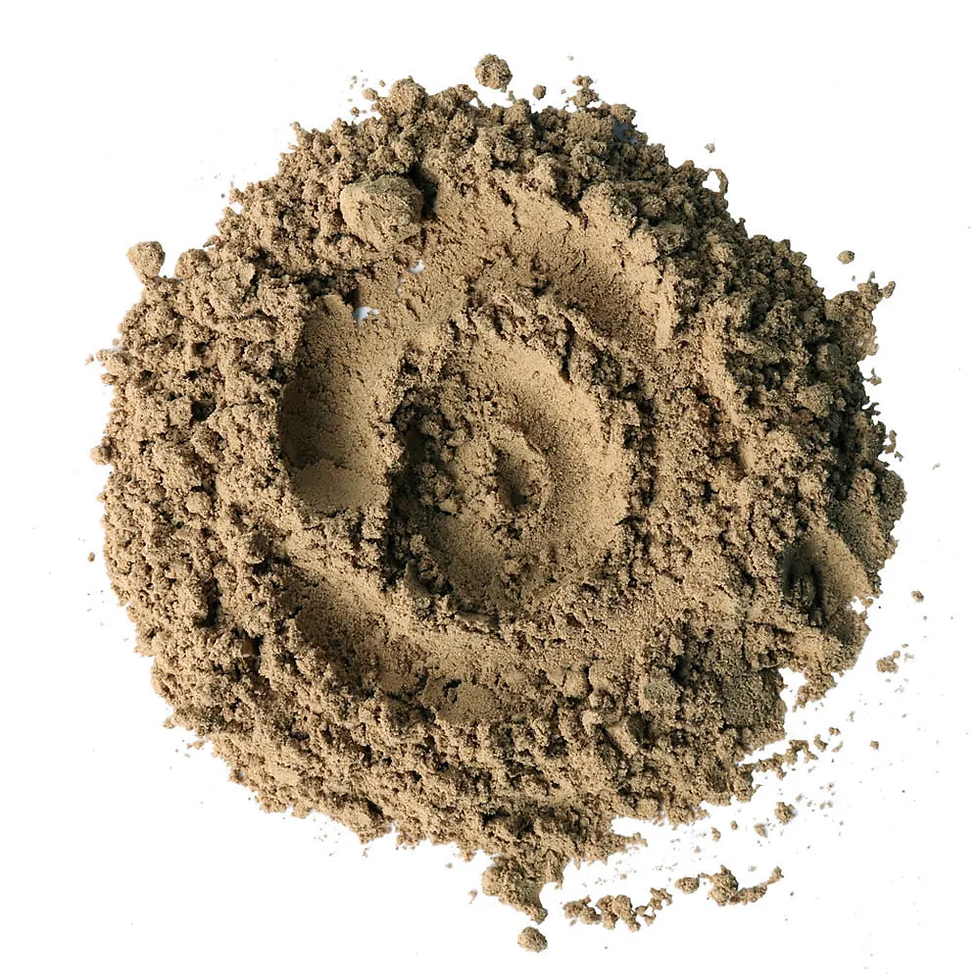
This powder is ambiguous in every possible way. Its taste, smell, color, texture, and overall sensory character are hard to describe straightforwardly. What my aunt certainly knew was that this sandy, dried-soil-looking powder, almost like something ground from suspicious little droppings, was usually added to fish soups such as Chueotang (추어탕), a traditional Korean loach soup, especially by old uncle-like figures in the south of South Korea, burping guiltlessly while trying to make an obviously fish-looking fish dish taste less fishy.

And then her mother-in-law, who had already shown herself to have quite a singular personality, uses it in her kimchi recipe.
Kimchi.
Kimchi?
By the time my aunt told me this story, she spoke with calmness, as if the shock had already been processed into a lesson. But I could still feel the initial disturbance she must have gone through. In Korea, it is not uncommon to hear these educationally surprising, damn eye-opening experiences from families-in-law.
Well, it is just a pickle, somehow red, isn’t it?

Both sides of her family had lived, and still live, in the southern part of South Korea. Their deeper origins may be something else, but their current labels are southern. Even so, their kimchi did not belong to quite the same world. Marriage brought two families together, but it also brought together different ideas of how kimchi should smell, taste, and feel.

More straightforwardly, if you are familiar with the cultural aspect of kimchi-making, it is also about how to insert Mother Nature into the stomachs of your family, and why. It is a survival strategy passed down through generations: an attempt to do the best for “my” people and “our” people on a resource-scarce mountainous peninsula, expressed through cooking and imprinted deep in the subconscious.
Still, it is just pickled vegetables, something many people around the world eat too, isn’t it?
You, my dearest reader, might open your kimchi jar once a week or once a month, assuming you are not Korean living in Korea. In many Korean households, it is not uncommon to eat the thing at least once a day with your partner at the dining table. Imagine having to deal with questionable smells every day. Imagine silent frustration accumulating into conflict. Or vice versa: poor kimchi may become a perfectly convenient medium through which to vent anger that actually comes from completely unrelated couple issues. What a fantastic opportunity to be efficiently passive-aggressive.

No explanation needed.
One was so done trying to make sense of the emotional intensity around family-in-law dynamics. Finally, the person could legitimately say: “This kimchi is just… the cabbage is too soggy, too salty, and what are these bug-like green seed fingers? My side of the family never practices this sort of kimchi recipe.”

Kimchi conflicts: conflicts created by dealing with another family’s kimchi recipe, smell, texture, seasoning, and the frequency of kimchi-making and kimchi-delivery, probably by your family-in-law, yes. Conflicts in which this poor fermented thing does its very best as a conversation medium, perhaps even trying to prevent the worst-case scenario.
Today’s guest in this Kimchi Conflict is sanchogaru: the spicy symbol of ambiguity, the witchy powder of an unarticulatable color.
Guess what? This powder may be one of the sources of the secretive, strong, addictive taste of southern Korean kimchi. It may also carry something of the resilience of the people, their food, and their taste buds, all shaped by hot, humid weather and the stubborn need to keep eating, preserving, adapting, and surviving.


Comments